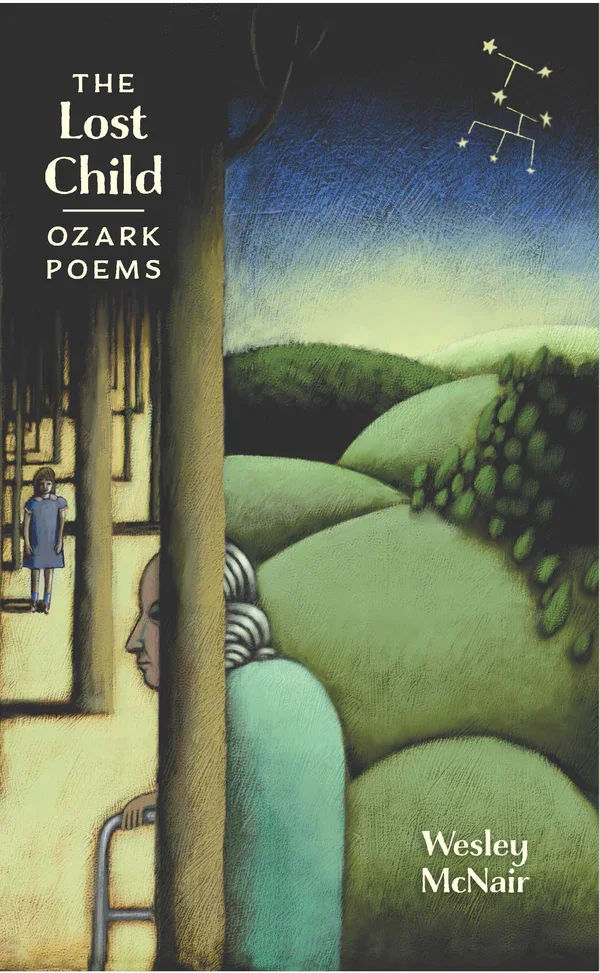
The Lost Child
David R. Godine, Publisher
Softcover (with flaps)
Pages: 160
Size: 5.5" x 8.5"
Published: April 2014
BUY NOW
Winner of the 2015 PEN New England Award for Literary Excellence in Poetry
In work inspired by the impending death of his mother, Wesley McNair, long a poet of New England places, takes a new path, exploring her homeplace in the Ozarks of Southern Missouri.
The linked poems of The Lost Child describe characters and events with the small, telling details for which McNair is noted, yet it also includes large themes: hope, delusion, family struggles, and lost selves. But the most important theme of all is reconciliation, as McNair attempts through these poems to know and understand his mother.
Critical Praise
“In his book-length narrative The Lost Child, Wesley McNair harnesses the timeless power of the epic poem to tell necessary stories of our human tribe. His masterful syntax dramatizes the agony and resilience of individuals under extreme duress: poverty, loss of physical and mental capacity, isolation from community. Simultaneously, McNair s lively wit and cunning humor befriend these characters connected by blood and history and dignify the particular details that shape their tales. The colloquial music in these poems will move readers to laughter and tears.”
—Robin Becker, Judge for the 2015 PEN New England Award for Poetry
‘McNair has a gift for creating a complex tension that shows respect for the characters while including realistic detail . . . The book will resonate with anyone interested in a realistic representation of families and emotional bonds. The Lost Child shows humans as loving and flawed, bringing the impoverished Sykes into poetry with authenticity and kindness. Thus McNair succeeds in creating the kind of poetry that Whitman would have wanted.”
—Mary Siobhan Brier, Off the Coast
“By the faculty of his attention—to people, to their talk—McNair's compassion turns itself into art.”
—Donald Hall, The Harvard Review
“He has produced one of the most individual and original bodies of work by a poet of his generation.”
—Ruminator Review